-
Shop
- Advanced Technologies
- AI Skills Mastery 2026 Collection
- Best Sellers
- Bottoms
- Car Accessories
- Dating & Social Skills
- Digital Products
- Digital Resources
- Dresses
- Education & Learning
- Family & Parenting
- Fashion
- Furniture
- Gadgets
- Health & Beauty
- Health & Wellness
- Home & Garden
- Jewelry
- Kids & Babies
- Patio, Lawn & Garden
- Personal Growth
- Pet Care
- Pet Supplies
- Pets
- Shoes
- Sport & Outdoors
- Swimwear
- Tops
- Travel
- Wealth
- Wealth Building
- Budgeting & Saving
- Cryptocurrency Investing
- Debt Management
- Entrepreneurship & Business Growth
- Family Finance & Budgeting
- Financial Independence
- Financial Mindset & Psychology
- Financial Planning
- Frugal Living & Expense Hacks
- Goal Setting
- High-Income Skills
- Leadership
- Networking & Mentorship
- Passive Income Strategies
- Real Estate Investing
- Side Hustles
- Stock Market Investing
- Workout Clothes & Activewear
Geometric Wall Mirrors: Brighten & Balance Your Living Room
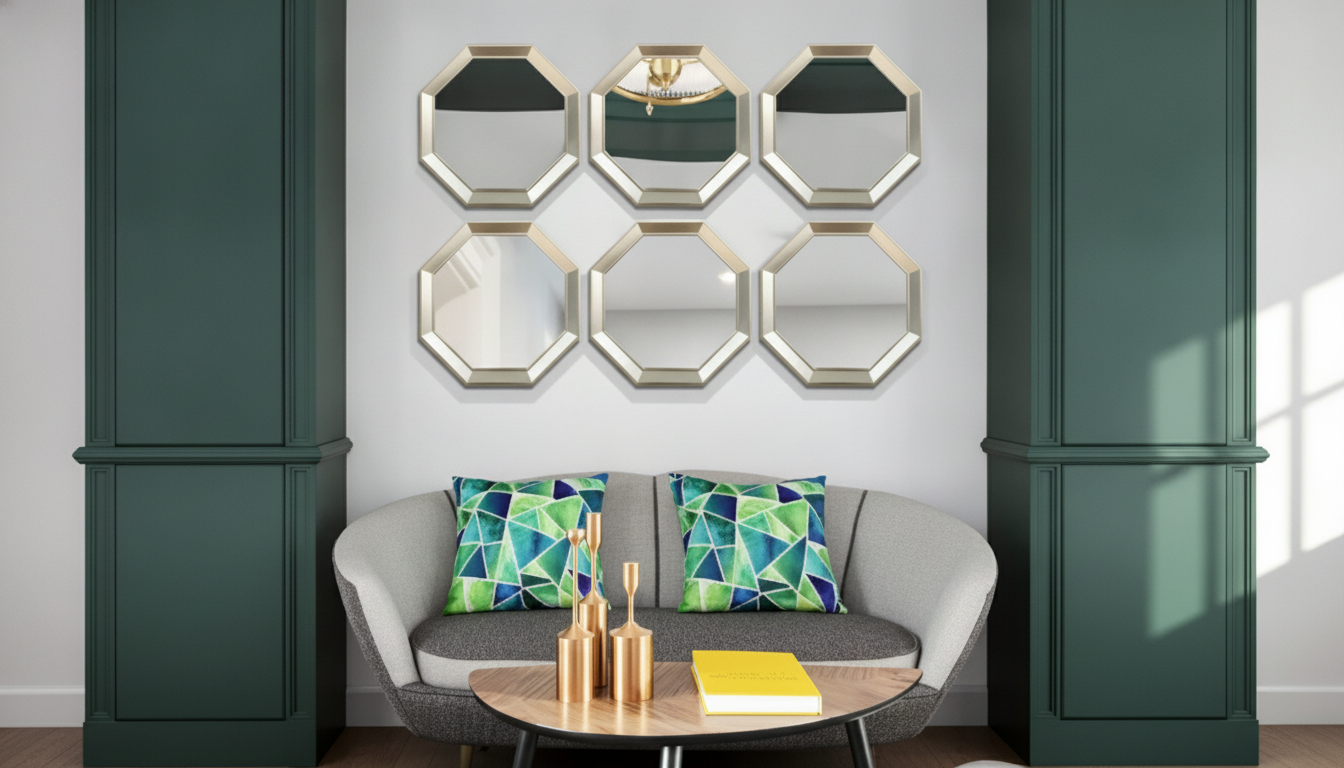
Geometric Wall Mirrors: Shape, Light, and Balance for Living Room Décor
Geometric wall mirrors add more than reflection—they bring structure to a blank wall, brighten darker corners, and create visual balance in a living room. Because the shapes feel intentional and architectural, they can make a space look more “finished” without adding extra objects that collect dust or crowd surfaces. With smart placement and proportion, a decorative mirror can open up a seating area, highlight artwork, and help modern, glam, and eclectic rooms feel cohesive.
What Geometric Decorative Mirrors Add to a Living Room
Geometric mirrors do a unique kind of heavy lifting: they’re functional, but they also read like wall art. That combination makes them especially useful in living rooms where you want impact without clutter.
- Creates a focal point with clean lines and repeating shapes that feel intentional and architectural.
- Amplifies light by reflecting windows, lamps, and candles—especially helpful in narrow or low-light rooms.
- Adds depth and makes a seating area feel more open without changing furniture placement.
- Pairs well with both minimal décor (one statement piece) and layered walls (gallery-style groupings).
If you’re cleaning and maintaining a mirror wall display, basic glass-care habits matter—especially with decorative frames and finishes. For general best practices, the American Cleaning Institute offers practical guidance on glass cleaning and everyday upkeep.
Choosing the Right Size and Proportion
Scale is what separates “designed” from “random.” A mirror that’s too small can look like an afterthought, while one that’s oversized in the wrong spot can overwhelm the room. Use furniture width and eye level as your starting points, then adjust for ceiling height and wall space.
- Over a sofa or console: aim for a mirror that spans about 2/3 to 3/4 of the furniture width for a balanced look.
- In small living rooms: a medium-to-large mirror can visually expand space more effectively than several tiny pieces.
- For high ceilings: consider a taller arrangement or vertical orientation to echo the room’s height.
- If the mirror is part of a set or cluster: keep consistent spacing so the shapes read as one composition.
Quick Sizing Guide for Common Living Room Placements
| Placement | Recommended Mirror Width | Hanging Height (general) | Styling Tip |
|---|---|---|---|
| Above sofa | About 65–75% of sofa width | Center of mirror near eye level when seated/standing | Keep 6–10 inches above the sofa back |
| Above console table | About 70–90% of console width | Center near eye level | Add a pair of sconces or lamps for layered reflection |
| Near entry into living room | Medium to large, scaled to wall | Center at eye level | Angle to reflect light rather than clutter |
| In a reading corner | Small to medium | Slightly above seated eye line | Place to bounce light from a floor lamp |
Placement Ideas That Look Intentional (Not Random)
The “best” placement depends on what you want the mirror to do: brighten the room, expand a tight area, or anchor a feature wall. The most successful placements feel purposeful because they align with sightlines and light sources.
- Opposite a window: Maximizes brightness and gives the room an airy feel.
- Behind a sofa: Anchors the main seating zone and frames the conversation area.
- Above a fireplace mantel: Reinforces symmetry; keep surrounding décor minimal so the mirror doesn’t compete.
- On a narrow wall between openings: Turns an awkward strip into a design moment.
- As part of a gallery wall: Use the mirror as the “light-catcher” among frames; repeat a metal finish to unify the wall.
One practical tip: before hanging, stand in a few common spots (entry, sofa, main walkway) and note what the mirror will reflect. A mirror that bounces daylight or a lamp glow looks polished; one that reflects cords, busy shelves, or a TV at an odd angle can feel visually noisy.
Matching Shapes and Finishes to Your Style
Hanging and Safety Essentials
A decorative mirror is only as good as its mounting. For living rooms—especially when hanging above seating—use hardware that matches the weight and wall type. For broader home safety guidance on secure mounting and tip-over prevention resources, reference the Consumer Product Safety Commission.
A Statement Option: Geometric Wall Hanging Decorative Mirrors
If the goal is to add structure and reflect light without crowding the room, a statement mirror can act like functional wall art. Geometric Wall Hanging Decorative Mirrors for Living Room Décor are designed to work as décor first, reflection second—ideal when you want the wall to look styled even when the room is “quiet” and uncluttered.
If you want to preview multiple layout ideas before committing to nail holes, a planning tool can help you visualize scale and placement. Dream Spaces with AI | Digital Guide for Home Design Inspiration, Prompts, and Visualization can support early experimenting—like testing whether a mirror looks best centered above the sofa or shifted to balance a floor lamp or bookcase.
FAQ
Where should a decorative geometric mirror go in a living room?
Place it where it can reflect natural light and create visual balance—often opposite a window, above a sofa or console, or as an anchor within a gallery wall. Keep the center around eye level and avoid positioning it to reflect cluttered shelves or high-traffic mess zones.
How high should a wall mirror be hung above a sofa or console?
Aim for the mirror’s center around eye level, then fine-tune based on ceiling height and nearby elements. Typically, keep it about 6–10 inches above the sofa back or a few inches above a console so the arrangement looks connected, not “floating.”
How do you clean decorative mirrors without damaging the frame?
Use a microfiber cloth and spray cleaner onto the cloth rather than directly onto the mirror, especially near seams. When unsure, choose a non-ammonia glass cleaner and gently dry the edges to help protect coatings and frame finishes.
Recommended for you
Was this article helpful?
Yes
No







Leave a comment