Rolling Stainless Steel Work Table with Wheels for Prep
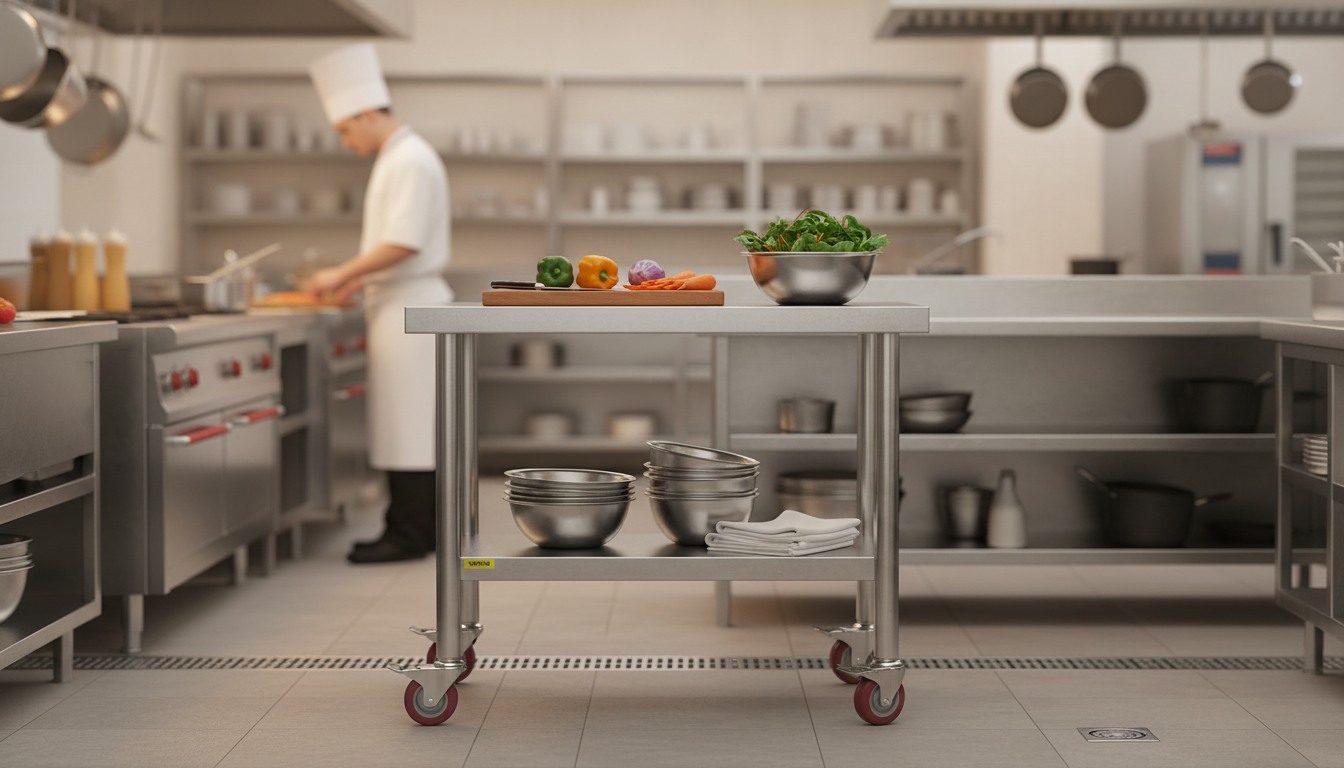
Stainless Steel Kitchen Work Table with Wheels: Flexible Prep Space for Busy Kitchens
A rolling stainless steel work table adds instant counter space wherever it’s needed—prep, plating, small-appliance staging, or overflow during holidays. With lockable casters and a wipe-clean surface, it’s designed to move smoothly between tasks while keeping a stable, sanitary workspace. If the kitchen regularly feels “one counter short,” a mobile table can make daily cooking feel calmer without changing your layout.
Why a rolling work table earns its place
A wheeled work table is one of those upgrades that’s easy to underestimate until it’s in the room. It creates a practical “extra counter” that can appear and disappear as your day changes.
- Creates extra prep surface without a permanent remodel—use it when needed and park it out of the way afterward.
- Supports multi-zone cooking: prep on the table, cook at the range, plate at the table again—less back-and-forth to fixed counters.
- Helps small kitchens feel larger by turning one surface into many stations (coffee bar in the morning, prep at dinner, baking on weekends).
- Useful beyond cooking: can double as a potting bench indoors, craft surface, or utility cart for entertaining.
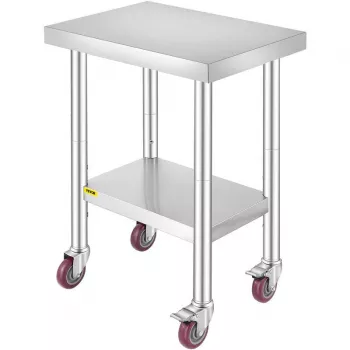
For a straightforward option that’s ready for everyday tasks, consider the Stainless Steel Kitchen Work Table with Wheels, which is designed to roll where you need it and lock down when it’s time to work.
Key features to look for (and why they matter)
Not all rolling prep tables feel equally solid. The details—caster quality, how the shelf is built, and how easy it is to wipe down—are what separate “handy” from “can’t live without.”
- Stainless steel worktop: resists stains and odors and handles everyday splashes; ideal for frequent wipe-downs.
- Wheels/casters: make the table genuinely useful—look for smooth-rolling casters and a solid mounting plate.
- Locking brakes: essential for stability during chopping, mixing, or using small appliances; engage brakes before heavy tasks.
- Lower shelf: adds storage for mixing bowls, small appliances, sheet pans, or pantry bins; keeps the top clear for prep.
- Rounded edges and corners: reduces snagging on towels and helps avoid bumps in tight walkways.
- Weight capacity guidance: match the table to the job (light staging vs. heavy appliances like stand mixers).
| Need | What to check | Good fit for |
|---|---|---|
| Stable chopping | Locking casters + sturdy frame | Daily prep, dough work, meal prep |
| Appliance station | Top size + weight capacity | Stand mixer, air fryer, microwave overflow |
| Tight kitchen | Overall footprint + wheel clearance | Apartments, galley kitchens |
| Easy cleaning | Smooth welds/joins + simple shelf design | Homes with frequent cooking, families |
| Entertaining | Maneuverability + parking space | Buffet setup, drink station, dessert bar |
Best uses around the home
Once you have a rolling table, it tends to collect jobs—because it’s faster to roll a station to the task than to rearrange the whole kitchen.
- Prep station: keep cutting boards, knives (stored safely), and mixing bowls within reach while freeing the main counter.
- Baking table: stage ingredients and cooling racks; park the table near an outlet for mixers when needed.
- Mobile coffee bar: store mugs and pods/beans below; roll to the dining area for guests.
- Pantry overflow and staging: unload groceries onto the table, sort, then move items to shelves and fridge efficiently.
- Outdoor-adjacent serving: roll near a patio door for grill nights, then return inside for cleanup.
For frequent handwashing and quick wipe-downs, pairing a mobile prep zone with an upgraded sink setup can streamline the flow—especially with a pull-out sprayer like the Luxury Gun Grey Intelligent Touch Kitchen Faucet with Pull-Out Spray for Hot & Cold Water.
Sizing and placement tips
The best rolling table is the one that fits the way you actually move. A few minutes of measuring can prevent most “it’s always in the way” regrets.
- Measure the parking spot first: account for door swings, drawer pulls, and the path you’ll roll through (including tight turns).
- Choose a working height that feels comfortable: as a general guide, prep surfaces often work best around counter height; prioritize ergonomics for frequent use.
- Leave breathing room: a little space around the table improves airflow and makes cleaning easier, especially near the fridge and range.
- Plan for storage below: measure tall items (mixing bowls, bins, appliances) to ensure they fit on the lower shelf without scraping.
- Protect floors: if using on hardwood or delicate tile, keep wheels clean and consider a thin mat in the parking area.
Setup, safety, and daily use
A rolling work table is simple equipment, but the safest experience comes from a couple of consistent habits—especially using the brakes and keeping loads balanced.
For food-safety basics and disinfecting guidance, refer to the USDA FSIS kitchen hygiene resources and the CDC’s cleaning and disinfecting guidance. For additional context on sanitation expectations in food equipment, NSF’s food equipment standards overview is a helpful reference point.
Cleaning and care for stainless steel
A practical pick for everyday flexibility
FAQ
Do the wheels lock securely enough for chopping and kneading?
They can, as long as the table has true locking casters and the brakes are engaged before forceful tasks. Stability also depends on an even floor, balanced loads, and keeping all fasteners tightened.
How should stainless steel be cleaned to avoid streaks and scratches?
Use warm water and mild dish soap, wipe with the grain, then rinse and dry right away. Avoid steel wool and gritty powders; choose a non-scratch pad for stuck-on residue.
Can a rolling work table hold small appliances like a stand mixer or air fryer?
Yes if the weight capacity and top dimensions match the appliance, and the item is placed centered on the surface. Lock the brakes during operation and keep cords managed near outlets to prevent snags while rolling.










Leave a comment