-
Shop
- Advanced Technologies
- AI Skills Mastery 2026 Collection
- Best Sellers
- Bottoms
- Car Accessories
- Dating & Social Skills
- Digital Products
- Digital Resources
- Dresses
- Education & Learning
- Family & Parenting
- Fashion
- Furniture
- Gadgets
- Health & Beauty
- Health & Wellness
- Home & Garden
- Jewelry
- Kids & Babies
- Patio, Lawn & Garden
- Personal Growth
- Pet Care
- Pet Supplies
- Pets
- Shoes
- Sport & Outdoors
- Swimwear
- Tops
- Travel
- Wealth
- Wealth Building
- Budgeting & Saving
- Cryptocurrency Investing
- Debt Management
- Entrepreneurship & Business Growth
- Family Finance & Budgeting
- Financial Independence
- Financial Mindset & Psychology
- Financial Planning
- Frugal Living & Expense Hacks
- Goal Setting
- High-Income Skills
- Leadership
- Networking & Mentorship
- Passive Income Strategies
- Real Estate Investing
- Side Hustles
- Stock Market Investing
- Workout Clothes & Activewear
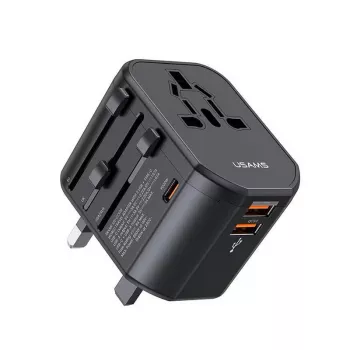
20W Universal Travel Charger: USB-C + Dual USB-A
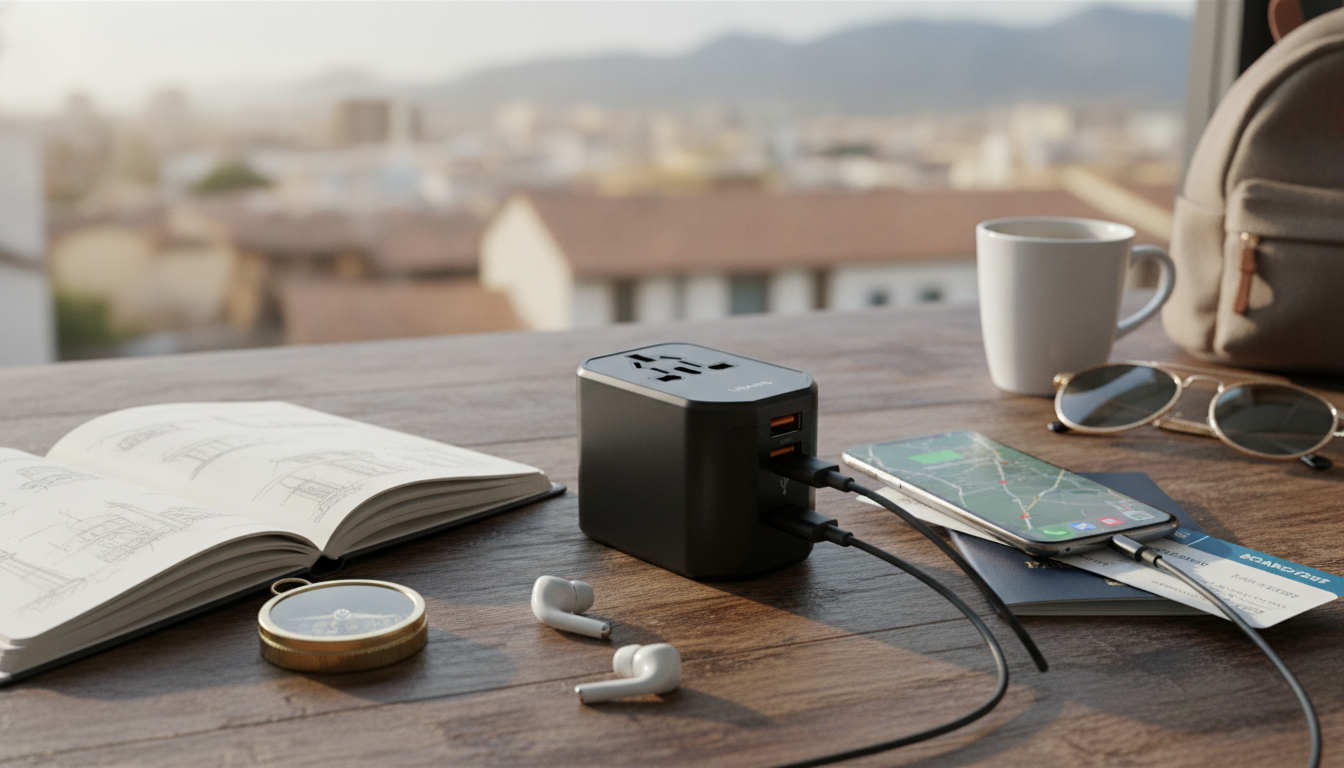
20W Universal Travel Charger with Dual USB & Type‑C Ports for Everyday Carry and International Trips
A compact travel charger can simplify packing by powering multiple devices from one outlet. This 20W universal travel charger combines dual USB-A and a USB‑C port to keep a phone, earbuds, and a tablet topped up at the hotel, airport, or café—without juggling multiple bricks.
What this charger is designed to do
When a trip (or a busy day out) involves multiple gadgets, charging can turn into a game of outlet-hunting. This 20W travel charger is built to act like a small “charging hub” that stays easy to carry, while still covering the most common cable types people use today.
- Provide a single, compact charging hub for common travel devices (phones, tablets, watches, earbuds, power banks).
- Offer flexible port options: USB‑C for newer devices and USB‑A for legacy cables.
- Reduce outlet competition when traveling with a partner or carrying multiple gadgets.
- Deliver up to 20W total output for faster top-ups than basic 5W chargers (device and cable dependent).
If you want one charger to handle everyday carry and travel days, start with the core option here: 20W Universal Travel Charger with Dual USB & Type-C Ports.
Ports and real-world charging scenarios
Three ports make it easier to keep essentials moving—especially when you’re rotating devices through a single outlet at a gate area or in an older hotel room with limited sockets.
- USB‑C port: commonly used for modern phones, tablets, and many power banks; often supports faster charging when paired with a compatible cable and device.
- Dual USB‑A ports: helpful for older cables and accessories like earbuds, e-readers, small fans, or travel gadgets.
- Shared power: when multiple devices are plugged in, output is typically distributed; prioritize the most important device on USB‑C when speed matters.
- Cable check: fastest charging usually requires a quality USB‑C cable rated for charging, plus a device that accepts higher input power.
Quick compatibility guide
| Device type | Best port to use | Tip for smoother charging |
|---|---|---|
| Phone (USB‑C) | USB‑C | Use a USB‑C to USB‑C cable rated for charging |
| Phone (Lightning) | USB‑A (with USB‑A to Lightning cable) | Use a certified cable to reduce charging interruptions |
| Tablet | USB‑C (preferred) | Charge overnight if also charging other devices |
| Earbuds / small accessories | USB‑A | Lower-power devices are ideal on USB‑A when sharing ports |
| Power bank | USB‑C or USB‑A (depends on model) | Check the power bank’s input rating for best speed |
A practical approach while traveling is to charge your “must-have” device first (often your phone on USB‑C), then use USB‑A for lower-draw items like earbuds. If you carry a rechargeable accessory for commuting or sightseeing, consider pairing your charger with the USB Rechargeable Super Bright Bike Headlight & Taillight Set so everything can top up from the same charging station.
Universal travel use: what “universal” covers (and what it doesn’t)
“Universal” is most useful for travelers who don’t want to pack a separate plug adapter for each destination. Universal chargers are typically designed to fit multiple outlet styles encountered in different regions, helping you plug in without carrying a pouch full of adapters.
- Universal chargers are typically built to work with multiple outlet styles encountered in different regions, reducing the need to pack separate plug adapters.
- A travel charger changes plug fit, not voltage requirements; most modern electronics support 100–240V input, but device labels should always be checked.
- For high-draw appliances (hair tools, kettles), a travel adapter/charger is not a voltage converter; use only equipment rated for the local voltage.
For background on USB‑C standards and cable basics, the USB Implementers Forum maintains reference materials at usb.org. If you want a quick overview of plug types around the world, the IEC provides a helpful reference at iec.ch.
Safety and durability considerations for travel charging
Travel charging is often tougher than home charging: older outlets, busy power strips in conference venues, and constant packing/unpacking. A few habits can make charging more reliable and help equipment last longer.
Packing tips for carry-on convenience
At-a-glance highlights of the 20W model
Key details
| Feature | What it means for daily use |
|---|---|
| 20W total output | Faster top-ups for supported phones and tablets, especially when charging one device at a time |
| USB‑C + 2× USB‑A | Supports both modern and older cables without extra dongles |
| Multi-device charging | One outlet can serve up to three devices, with power shared across ports |
| Travel-ready design | Reduces the need to pack multiple charging bricks |
For a compact, do-it-all option that works for everyday carry and international trips, choose the 20W Universal Travel Charger with Dual USB & Type-C Ports and build a small cable kit around it.
FAQ
Can the USB‑C port fast-charge a phone?
It can fast-charge compatible phones, but the actual speed depends on your phone’s supported charging standard, the cable quality, and whether other devices are sharing the charger’s up to 20W total output.
Is a universal travel charger the same as a voltage converter?
No. A universal travel charger helps with plug compatibility and charging, but it doesn’t convert voltage for high-power appliances. Always check your device’s input rating (many electronics support 100–240V).
Can three devices charge at the same time?
Yes, three devices can charge simultaneously using the USB‑C and two USB‑A ports. Keep in mind the output is typically shared, so each device may charge more slowly than when charging alone.
Recommended for you


Was this article helpful?
Yes
No









Leave a comment